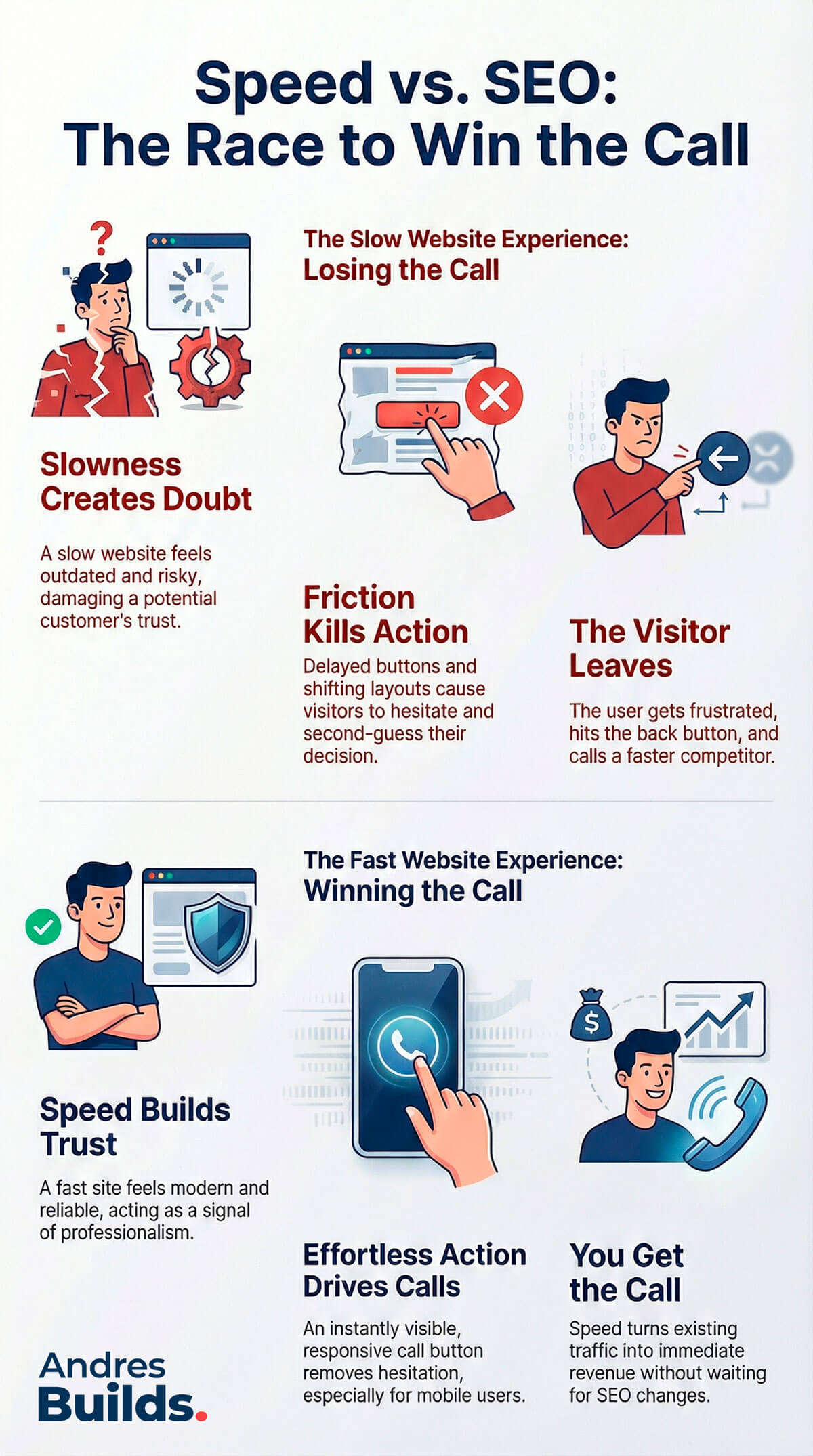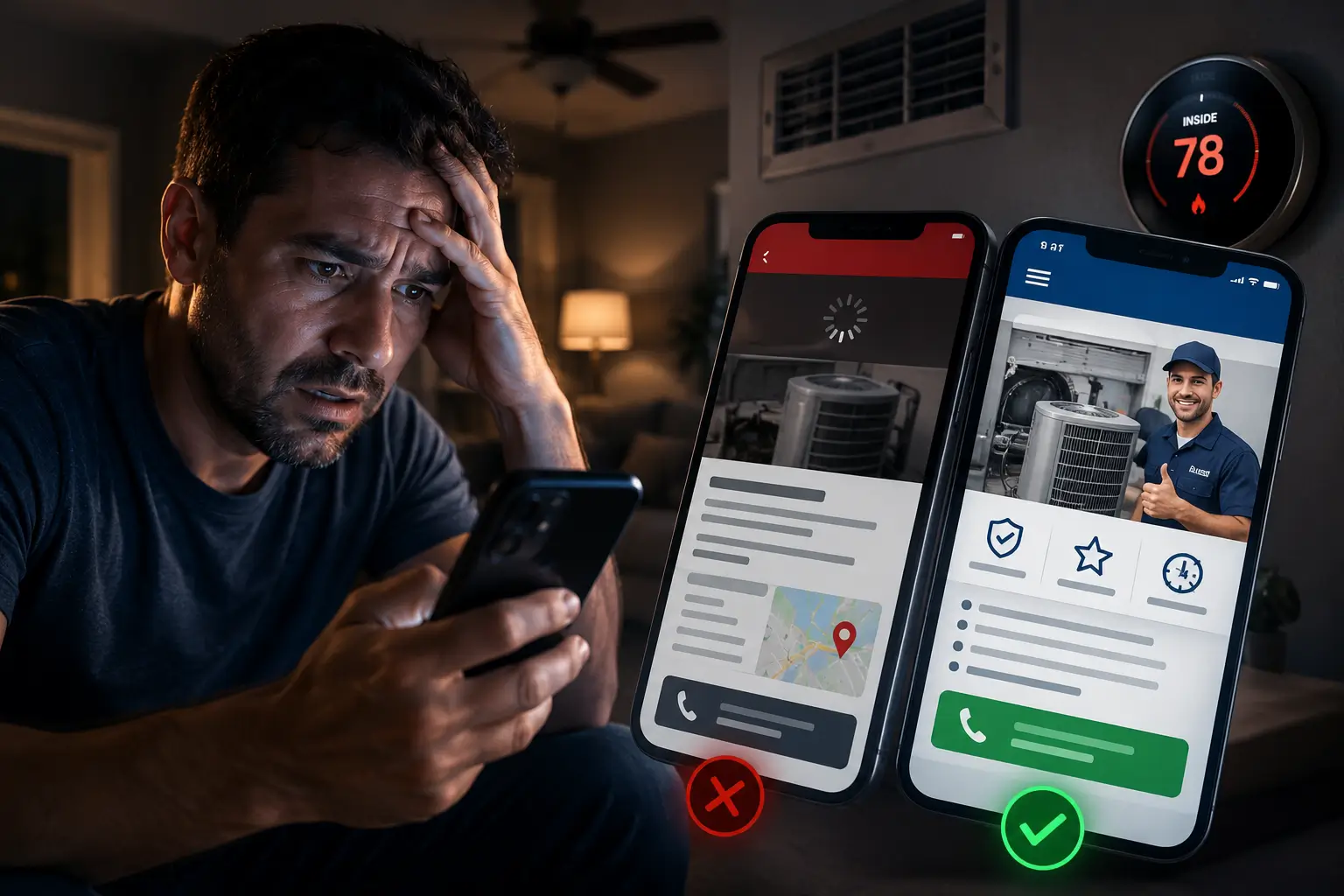

Fast websites booked calls long before Google rankings even change. In simple terms, fast websites booked calls because speed reduces friction, builds trust instantly, and removes hesitation at the exact moment a visitor decides whether to call. In simple terms, fast websites booked calls because speed reduces hesitation, builds trust, and makes calling feel effortless for visitors. When a service business website loads quickly, feels responsive, and makes it easy to act, visitors are far more likely to pick up the phone or request a callback. Speed builds trust. Slowness creates doubt.
For service businesses, calls are revenue. And website speed is one of the most overlooked factors that determines whether a visitor becomes a booked call or disappears to a competitor.
This article explains why fast websites get more booked calls, how speed directly influences caller behavior, and what to fix if your site isn’t converting visits into real conversations.
Listen: Why Fast Websites Booked Calls (Not Just Better SEO) (Full Episode)
Quick Summary (Read This First)
- Fast websites turn visitors into booked calls by removing friction
- Slow load experiences silently reduce mobile call intent
- Speed influences calls immediately, SEO works over time
- Trust, urgency, and responsiveness matter more than rankings
If you run an appointment-based business like HVAC, dental, legal, home services, med spas, or professional services, this applies directly to you. These businesses depend on calls, not long browsing sessions.
Why Calls Matter More Than Rankings for Service Businesses

SEO brings traffic. Calls bring revenue.
Most service businesses don’t sell products online. They sell conversations, estimates, and appointments. That means the primary goal of the website is not pageviews, but getting the visitor to call.
If your site ranks well but loads slowly, visitors hesitate. If it loads fast, they act.
For context on why speed matters beyond rankings: Why Website Speed Matters
How Website Speed Influences Caller Behavior
If your website feels slow, you are not just missing opportunities. You are actively sending ready-to-call visitors to faster competitors.
Website speed affects human behavior in subtle but powerful ways.
1. Speed Signals Professionalism
A fast site feels modern and reliable. A slow one feels outdated or risky.
When visitors are deciding who to call, speed becomes a proxy for quality.
2. Speed Reduces Cognitive Load
Slow-loading pages force users to wait, think, and second-guess their actions. Fast pages let users focus on one action: calling.
3. Speed Increases Mobile Call Intent
Most booked calls happen on mobile devices. Mobile users are impatient and often multitasking.
If the site loads instantly and the call button is ready, the number of calls increases.
Google measures this using real-user data: https://web.dev/vitals/
How Fast Websites Turn Visitors Into Booked Calls
Fast Websites vs Slow Websites: What Happens in Real Life
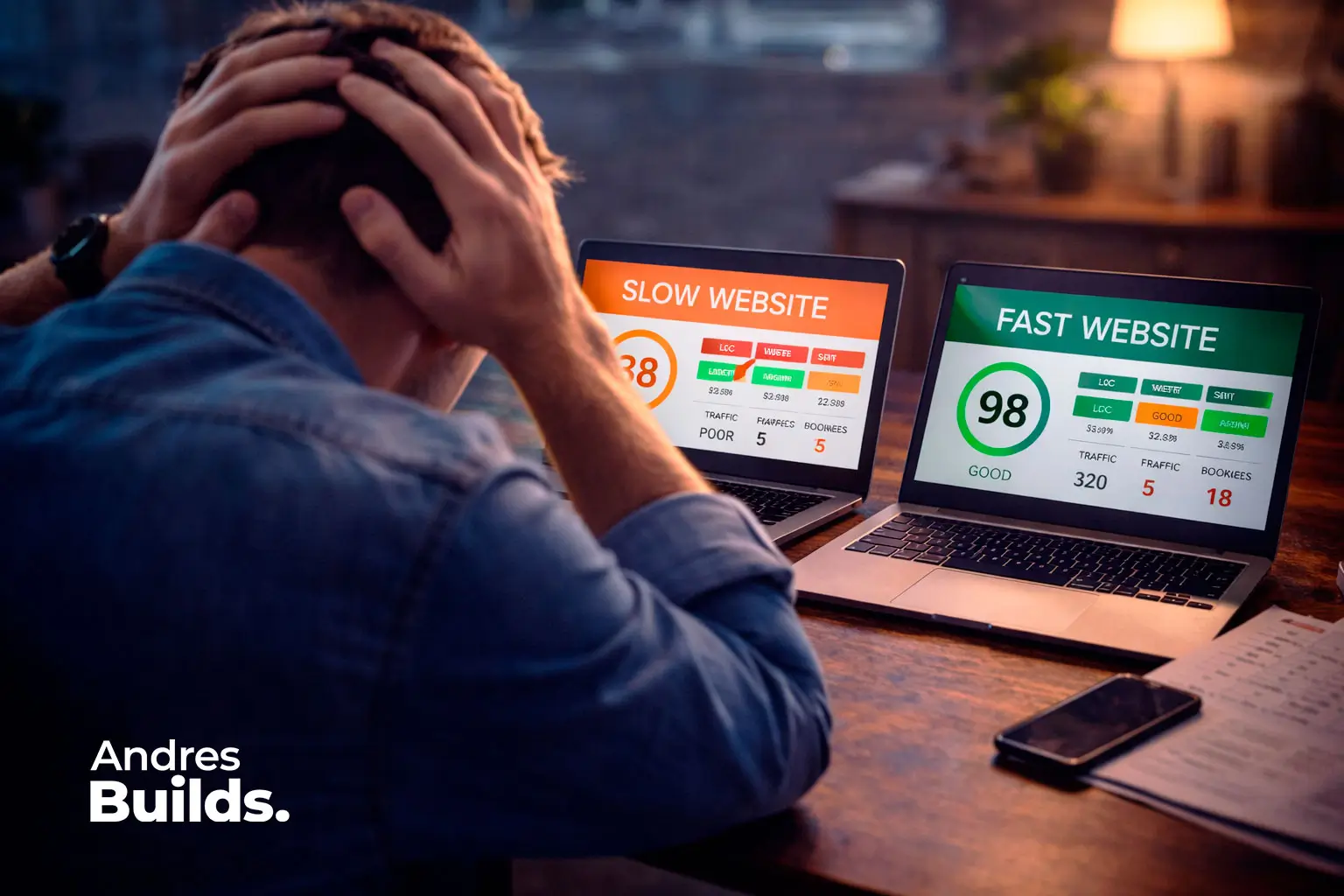
Quick note: If you want to know whether speed issues are costing your business real calls, you can request a free Website Speed & Conversion Audit and get a clear breakdown of what to fix first.
Slow Website Scenario
- Page loads slowly
- Call button appears late
- Layout shifts while scrolling
- Visitor taps back and chooses another provider
Fast Website Scenario
- Page loads quickly
- Trust elements appear immediately
- Call button is visible and responsive
- Visitor taps to call
Speed changes the outcome without adding traffic.
Why SEO Alone Is Not Enough
Ranking higher does not guarantee more calls.
If two businesses rank next to each other:
- The faster site feels easier
- The faster site feels safer
- The faster site gets the call
That’s why speed improvements often increase calls before SEO rankings move.
To understand how speed affects rankings and conversions: Core Web Vitals Optimization Guide
The Technical Reasons Fast Websites Convert Better
Faster TTFB Builds Confidence
As a practical benchmark for service businesses:
- Mobile LCP should be under ~2.5 seconds
- INP should stay under ~200ms for call buttons
- TTFB above ~400ms usually signals hosting problems
Slow server response time creates instant friction.
Faster LCP Shows Value Quickly
The visitor sees services, credibility, and contact options immediately.
Better INP Makes Buttons Feel Instant
Laggy call buttons destroy urgency.
Stable Layouts Prevent Missed Taps
CLS issues can cause users to miss the call button.
Learn how Google evaluates these signals: Google PageSpeed Insights Impact
The Mobile Call Flow Most Sites Get Wrong
Common problems:
- Call button hidden below the fold
- Heavy scripts blocking interaction
- Sliders delaying content
- Phone number not clickable
If you want to improve mobile-first performance: Measure Website Speed Like Google Does
How to Optimize for More Booked Calls
Step 1: Make the Call Action Instantly Available
- Click-to-call visible immediately
- Sticky call button on mobile
- No delays from scripts
Step 2: Remove Speed Bottlenecks
- Fix hosting and TTFB
- Optimize hero content
- Reduce JavaScript execution
Step 3: Test the Call Flow on Mobile
- Tap the call button yourself
- Watch for delays or layout shifts
For WordPress sites: WordPress Speed Optimization Guide and Advanced WordPress Optimization: Beyond Cache Plugins
Real-World Example: Speed Increased Calls Without More Traffic
We see this pattern consistently across service businesses where calls are the primary conversion.
A service business improved:
- Mobile load time
- Call button responsiveness
- Layout stability
Result:
- More calls
- Higher-quality leads
- No increase in ad spend
Speed changed behavior, not traffic volume.


Common Mistakes That Kill Calls
- Chasing rankings while ignoring speed
- Optimizing desktop only
- Hiding call actions
- Loading unnecessary scripts
FAQs About Fast Websites Booked Calls
Do fast websites really get more calls?
Yes. Fast websites reduce friction, build trust instantly, and make it easier for visitors to take action.
Why does website speed affect phone calls?
Because speed influences trust, urgency, and usability, especially on mobile devices.
Is website speed more important than SEO for calls?
Speed impacts conversions immediately, while SEO affects traffic over time.
How fast should a website be to get more calls?
For service businesses, mobile pages should load quickly and remain responsive during interaction.
Do fast websites really get more calls?
Yes. Fast websites reduce friction and increase trust, making visitors more likely to call.
Is speed more important than SEO?
Speed affects conversions immediately. SEO affects traffic over time.
What page should I optimize first?
Your homepage or your main service page where users decide to call.
Want More Booked Calls From Your Website?
If your site is slow, you’re losing calls every day.
My flagship offer is Speed & Booking Fix. I’ll run a free Website Speed & Conversion Audit (worth $800) to show you exactly how speed issues are costing you calls.
You’ll get:
- Real-user performance data
- Mobile call flow review
- Clear, prioritized fixes
Request your free audit and turn speed into booked calls.