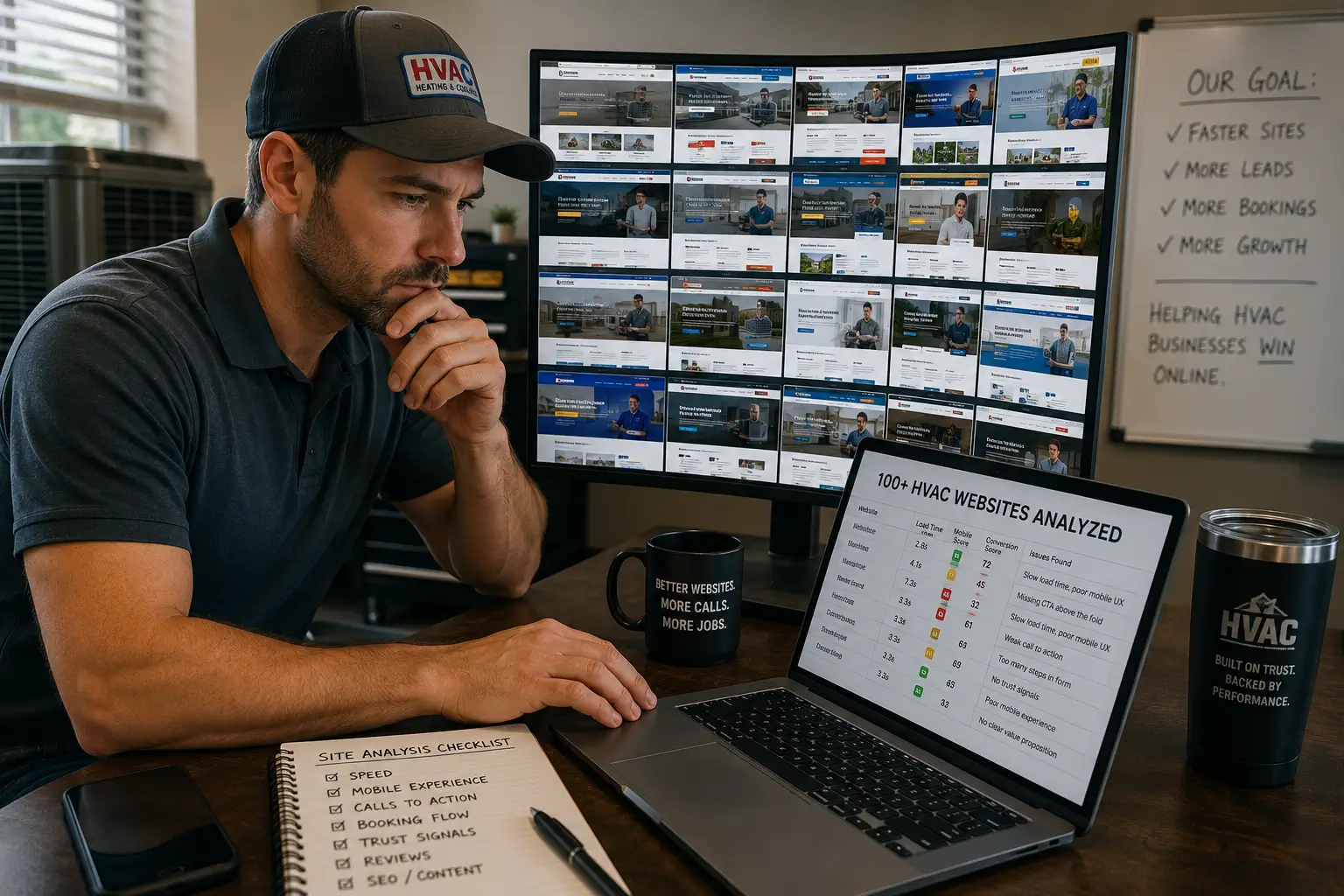

Most HVAC website visitors are not casually browsing.
Especially during emergency searches.
They’re stressed.
Uncomfortable.
Hot.
Frustrated.
In a hurry.
And they usually need help fast.
That changes everything about how they behave online.
During emergency HVAC searches, homeowners do not carefully analyze websites.
They make rapid trust decisions in seconds.
That means:
- slow loading becomes deadly
- weak CTAs become expensive
- poor mobile UX kills calls
- clutter creates hesitation
- weak trust signals reduce conversions immediately
And most HVAC websites are not built for this type of urgency.
That’s why many HVAC companies quietly lose emergency calls before the phone even rings.
If your HVAC website already struggles with hidden conversion leaks, this article on HVAC Website Conversion Revenue Leak explains why so many HVAC companies lose high-intent visitors without realizing it.
Key Takeaways
- Emergency HVAC visitors behave differently from normal website visitors
- Most emergency HVAC searches happen on mobile devices
- Visitors make trust decisions within seconds
- Slow HVAC websites lose emergency calls quickly
- HVAC booking friction increases abandonment during urgent searches
- Emergency HVAC conversions depend heavily on speed, trust, and CTA clarity
- Retargeting can help recover lost emergency visitors before competitors do
The Psychology Behind Emergency HVAC Searches
Emergency HVAC searches are emotionally driven.
A homeowner searching:
“24 hour AC repair near me”
is usually not:
- casually researching
- reading long paragraphs
- comparing technical details carefully
Instead, they are:
- overheating
- stressed
- uncomfortable
- impatient
- looking for immediate reassurance
This creates completely different user behavior.
Emergency visitors want fast answers.
Immediately.
The 5 Seconds That Decide HVAC Calls
During emergency searches, HVAC websites usually have less than 5 seconds to create enough trust for a visitor to continue.
That’s it.
Within those few seconds, homeowners subconsciously evaluate:
- Does this company feel legitimate?
- Can they help me quickly?
- Do they look trustworthy?
- Can I contact them easily?
- Do they feel professional?
- Will someone actually answer?
If the website creates friction during those first seconds, visitors often leave immediately and contact another HVAC company instead.
That’s why this article on Homepage Optimization Tips Double Your Leads is highly relevant for HVAC companies struggling with emergency conversions.
Because first impressions during urgency matter more than most businesses realize.
Why Emergency HVAC Visitors Behave Differently
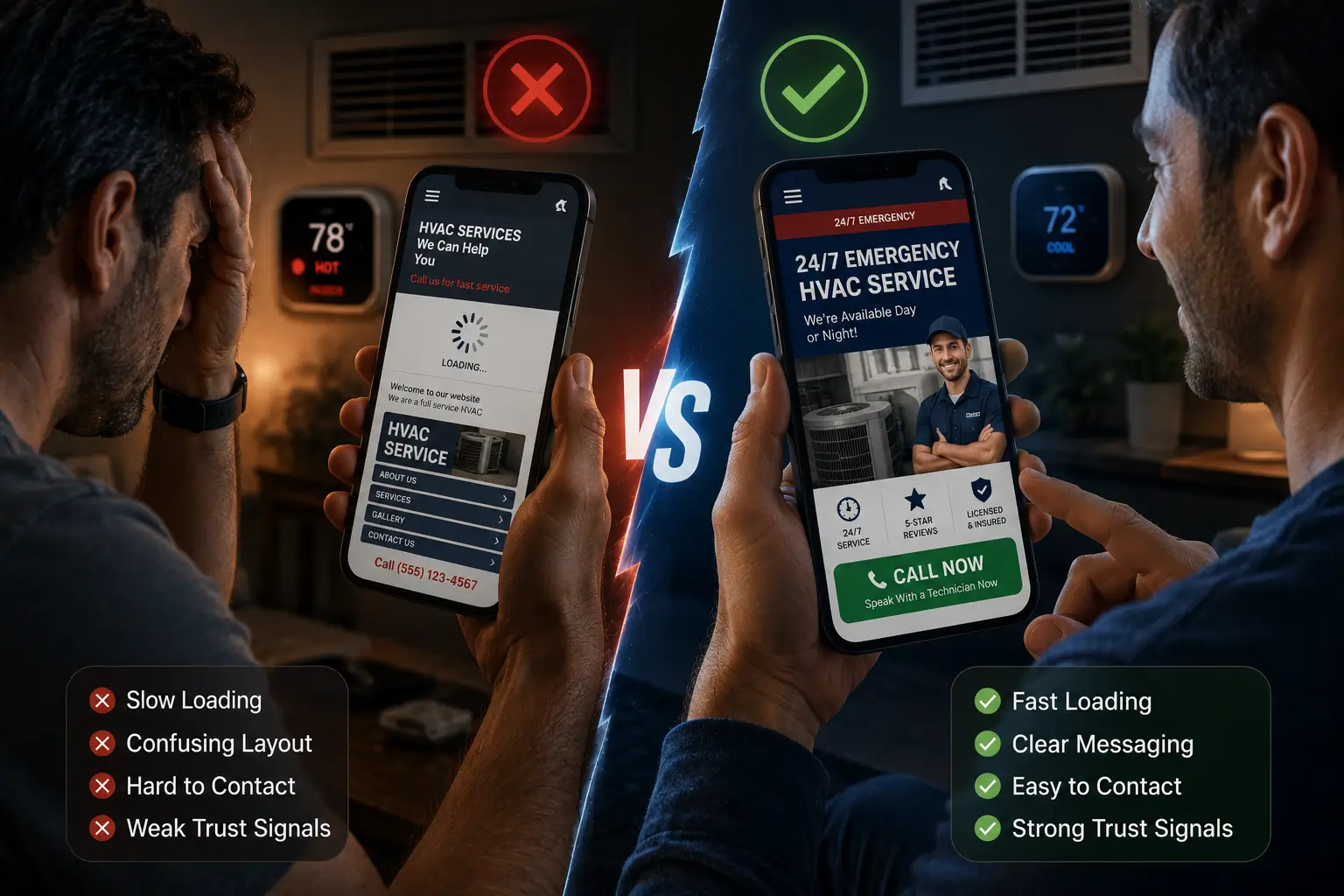
Emergency visitors do not browse like normal users.
They:
- scan quickly
- compare companies rapidly
- rely heavily on visual trust
- prefer obvious CTAs
- abandon slow websites faster
- avoid confusing layouts
Especially on mobile.
And HVAC traffic today is heavily mobile-driven.
This means your website must work perfectly under pressure.
Not just look visually “nice.”
The Mobile Problem in Emergency HVAC Searches
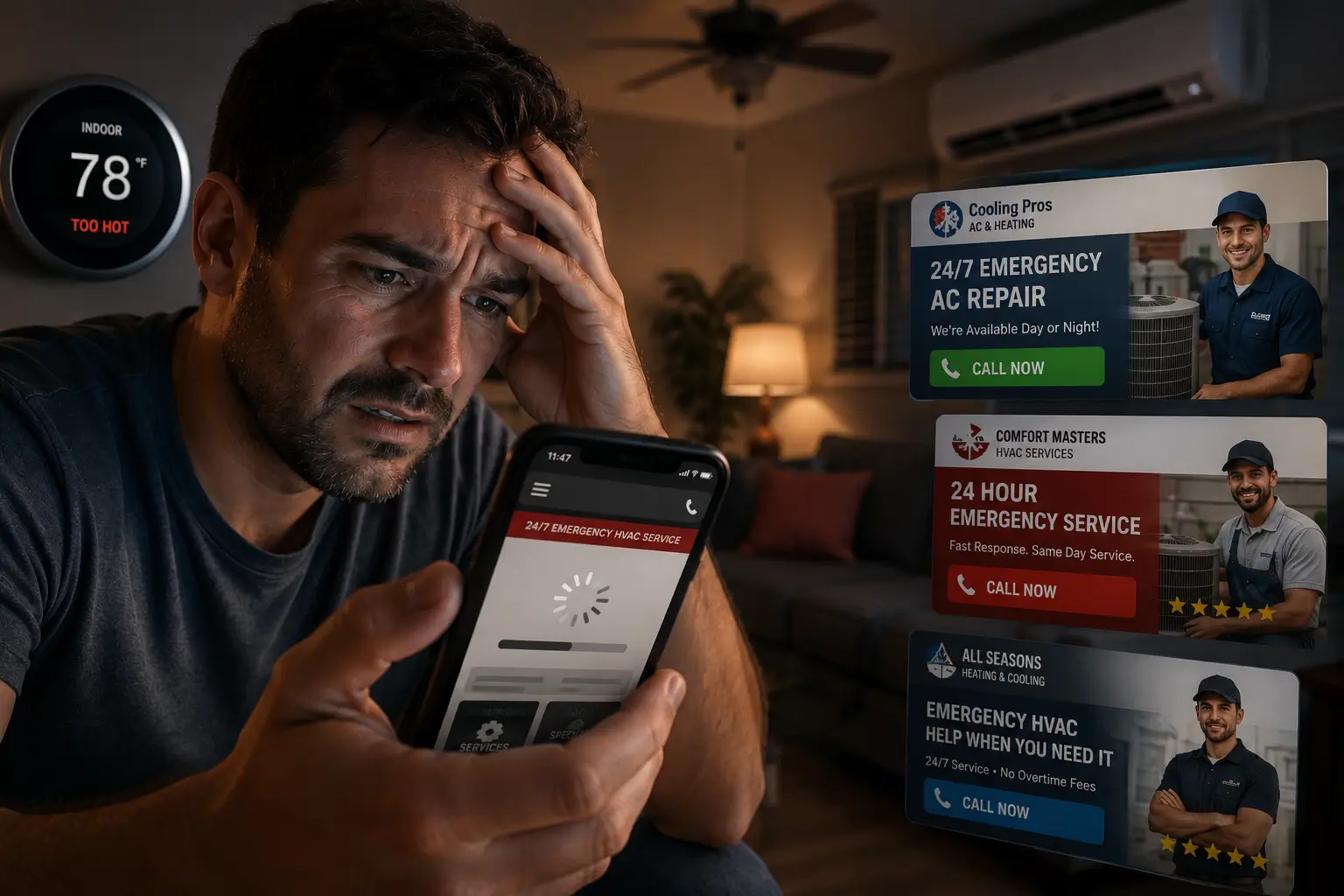
Most emergency HVAC searches happen on mobile devices.
Usually:
- during stressful situations
- while multitasking
- late at night
- during extreme temperatures
- while talking with family members
This creates very low patience levels.
If your HVAC website:
- loads slowly
- hides the phone number
- delays trust signals
- overwhelms the screen
- creates booking friction
then visitors often leave immediately.
Research from Google PageSpeed Insights Documentation consistently shows that slower mobile experiences reduce engagement and increase abandonment.
This article on Why Website Speed Matters explains why mobile speed heavily impacts trust and booked calls.
You should also review this Core Web Vitals Optimization Guide if your HVAC website struggles with mobile performance.
The Biggest Emergency HVAC Conversion Mistakes
After reviewing many HVAC websites, these are the most common emergency conversion problems:
Slow Mobile Speed
Emergency visitors leave extremely fast when websites feel slow.
Especially during:
- heat waves
- late-night emergencies
- same-day service searches
This article on Website Speed Bookings explains how website performance directly affects booked calls.
Weak Above-the-Fold Messaging
Many HVAC websites fail to immediately communicate:
- emergency availability
- trust
- response speed
- service areas
- contact options
Visitors should understand within seconds:
“Can this company help me right now?”
Poor CTA Visibility
Many HVAC sites bury:
- phone numbers
- booking buttons
- emergency contact options
That creates hesitation during urgent searches.
Cluttered Mobile Layouts
Too much:
- text
- animation
- visual clutter
- menu complexity
creates friction.
Especially during emergencies.
Many of these problems are also covered in HVAC Websites Conversion Issues.
What Emergency HVAC Customers Need to See Immediately
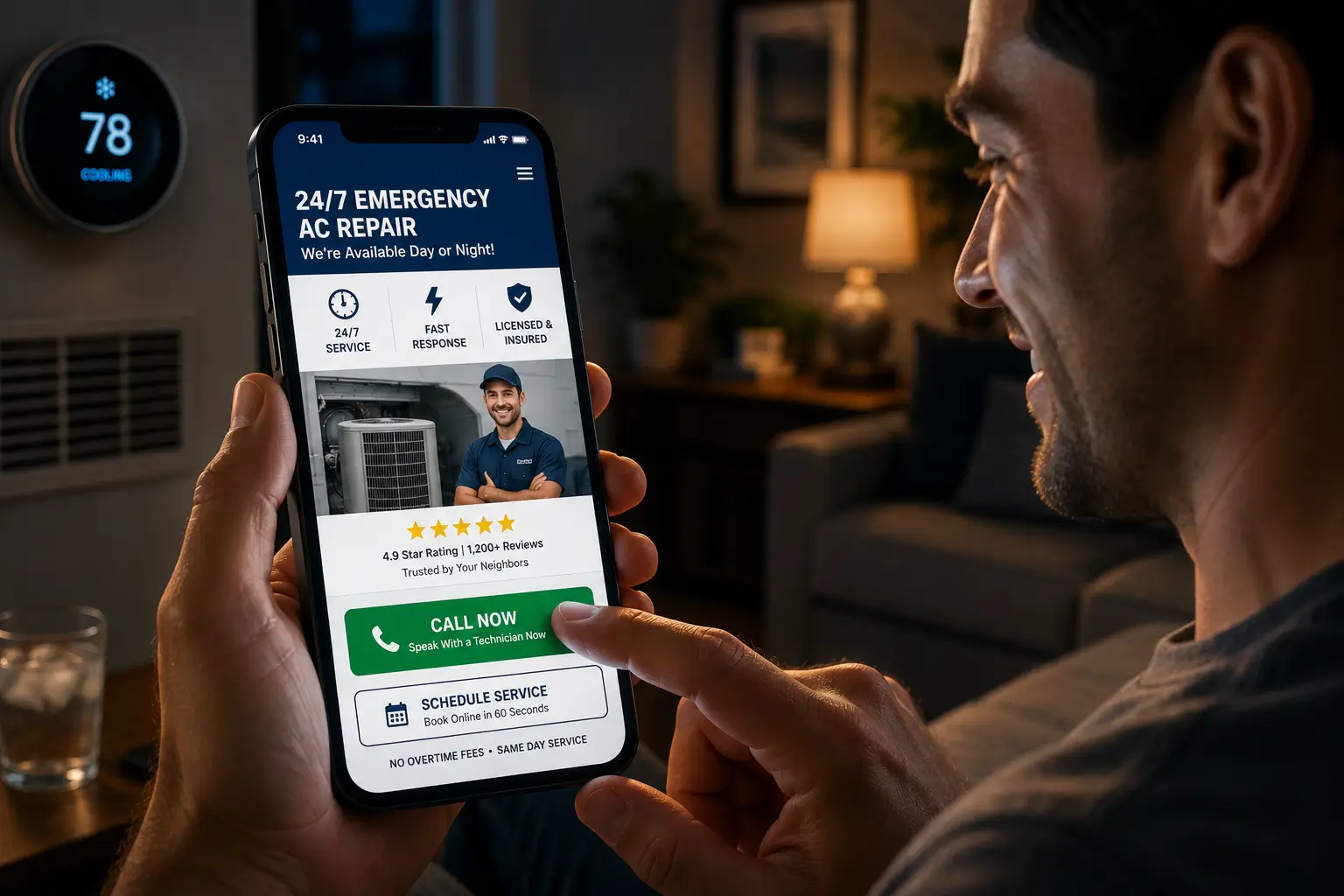
High-converting HVAC websites usually show these things immediately:
Fast Loading Speed
No delays.
No waiting.
Clear Emergency Messaging
Examples:
- 24/7 HVAC Repair
- Same-Day Service
- Emergency AC Repair
Immediate Trust Signals
Examples:
- reviews
- certifications
- years in business
- guarantees
- technician photos
Obvious Contact Options
Visitors should never search for:
- phone numbers
- booking buttons
- service requests
Mobile-Friendly Experience
Fast.
Simple.
Clear.
Not overloaded.
Wondering How Many Emergency HVAC Calls Your Website Is Losing?
Most HVAC companies don’t realize how many emergency visitors leave before contacting them.
Usually because of:
- mobile friction
- slow loading
- weak trust positioning
- poor CTA visibility
- confusing layouts
Request a free HVAC website audit and discover:
- where visitors are dropping off
- what’s reducing booked calls
- what competitors are likely doing better
- what can realistically improve conversions


Why HVAC Websites Lose Emergency Leads Even When Ads Are Working
Many HVAC companies assume:
“Our Google Ads aren’t working.”
But often:
the traffic is fine.
The website experience is the problem.
Emergency clicks are expensive.
Especially in competitive cities like Houston, Phoenix, and Atlanta.
If your HVAC website creates hesitation during emergency searches, paid traffic becomes dramatically less efficient.
That’s exactly why this article on HVAC Website Optimization Before Ads is important before scaling advertising.
How Retargeting Helps Recover Emergency HVAC Visitors
Not every emergency visitor converts immediately.
Some:
- compare providers
- ask family members
- get distracted
- wait briefly before deciding
That’s why retargeting becomes extremely valuable.
This article on HVAC Site Retargeting explains how HVAC companies can stay visible after visitors leave the website.
Because during emergencies, the company homeowners who remember first often get the call.
What High-Converting HVAC Emergency Websites Do Differently
After analyzing many HVAC websites, high-performing companies usually do these things better:
Faster Mobile Performance
Visitors see information instantly.
Simpler Emergency UX
Less friction.
Fewer distractions.
Stronger Trust Positioning
Trust appears immediately.
Better CTA Visibility
Phone numbers and booking actions remain obvious.
Stronger Visual Hierarchy
Visitors know exactly what to do next.
Better Mobile Layouts
Clean.
Fast.
Easy to scan.
That combination dramatically improves emergency conversion rates.
The Emergency HVAC Decision Window
Emergency HVAC conversions happen inside a very small decision window.
Usually within:
- minutes
- seconds
- one browsing session
That means HVAC websites must:
- build trust fast
- reduce hesitation immediately
- simplify action
- remove friction
Because during emergency searches:
small UX problems become expensive revenue leaks.
Final Thoughts
Most HVAC websites are not optimized for emergency behavior.
They function more like digital brochures instead of urgency-focused conversion systems.
But emergency HVAC visitors behave differently.
They:
- make faster decisions
- trust faster
- abandon faster
- compare faster
- call faster
That means:
- speed matters more
- trust matters more
- mobile UX matters more
- CTA visibility matters more
And HVAC companies that optimize for emergency search behavior usually recover significantly more high-intent calls from existing traffic.
Because the real problem is often not visibility.
It’s what happens during the first few seconds after visitors land on the website.
Frequently Asked Questions
Why do HVAC websites lose emergency calls?
Most HVAC websites lose emergency calls because of:
slow mobile speed
weak trust signals
poor CTA visibility
confusing layouts
booking friction
Why is mobile optimization important for HVAC emergency searches?
Most emergency HVAC searches happen on mobile devices, where users have very low patience levels and expect fast, clear experiences.
How quickly do emergency HVAC visitors make decisions?
Many emergency HVAC visitors decide within seconds whether a company feels trustworthy enough to contact.
Can HVAC retargeting help recover emergency visitors?
Yes. Retargeting helps HVAC companies stay visible after visitors leave the site and compare competitors.
What should HVAC websites show first during emergency searches?
The most important elements are:
emergency service messaging
fast loading speed
trust signals
obvious contact options
mobile-friendly layouts
Do you offer HVAC website optimization services in major U.S. cities?
Yes. Andres Builds works with HVAC companies across major markets, including Dallas, Charlotte, Phoenix, Houston, Atlanta, and Las Vegas.
Your HVAC Website May Already Have Enough Traffic
The real issue is often what happens during urgent searches.
Slow mobile speed.
Weak trust positioning.
Poor CTA visibility.
Booking friction.
Confusing layouts.
That’s where HVAC companies quietly lose emergency calls every week.
Request a free HVAC website audit and I’ll show you:
- where visitors are dropping off
- what’s hurting emergency conversions
- what competitors are likely doing better
- what can realistically improve booked calls
No fluff.
No generic report.
Just practical conversion opportunities based on your actual HVAC website.