
Most HVAC websites don’t have a traffic problem.
They have a conversion problem.
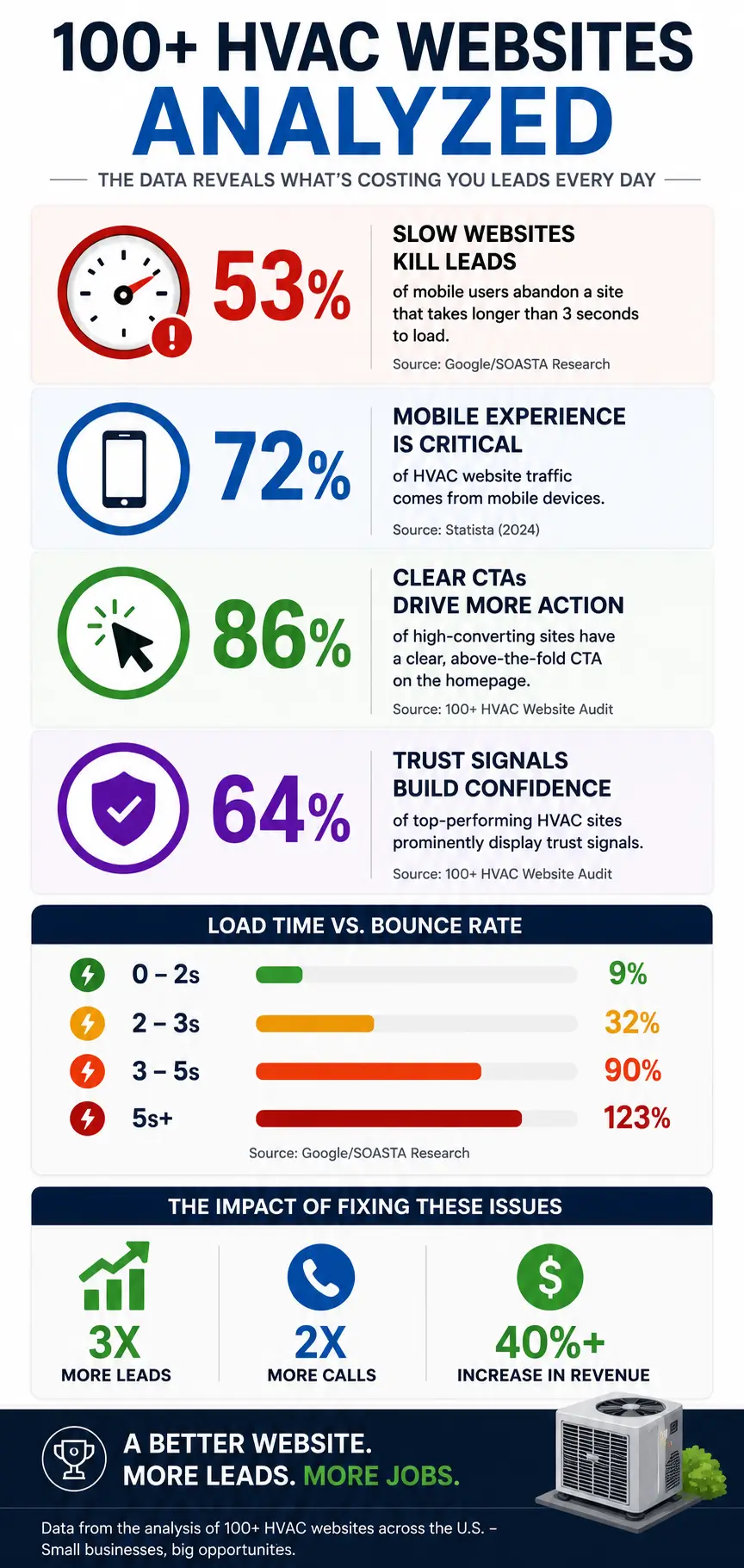
Over the past months, I’ve analyzed 100+ HVAC websites across the U.S., and the pattern is always the same:
Businesses invest in ads, SEO, and marketing… but their website silently kills the results.
Slow pages. Confusing layouts. Weak calls to action—broken mobile experiences.
And the worst part?
Most business owners don’t even realize how many calls they’re losing.
If your site is already getting traffic but not enough calls, bookings, or form submissions, the issue is usually friction. That’s exactly what our HVAC Website Speed & Conversion Service is designed to fix.
In this guide, I’ll break down the most common conversion killers I see on HVAC websites and show you exactly how to fix them.
Key Takeaways
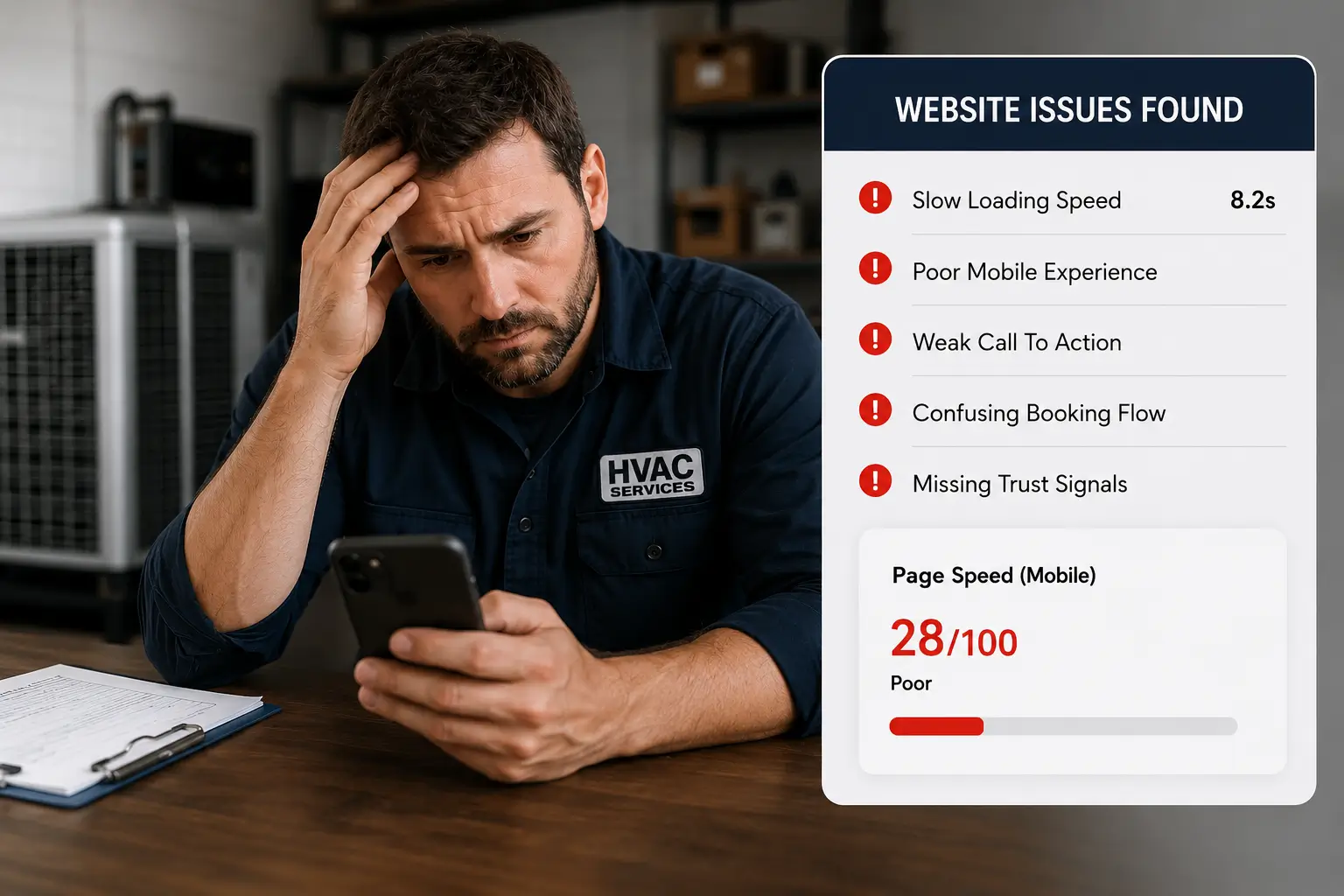
- Most HVAC websites lose leads because of friction, not lack of traffic
- Mobile experience is the #1 conversion bottleneck
- Poor booking flow and weak CTAs directly reduce calls
- Slow websites can decrease conversions by 20–40%
- Small UX improvements can dramatically increase inquiries
The #1 Problem: Slow Websites That Kill First Impressions
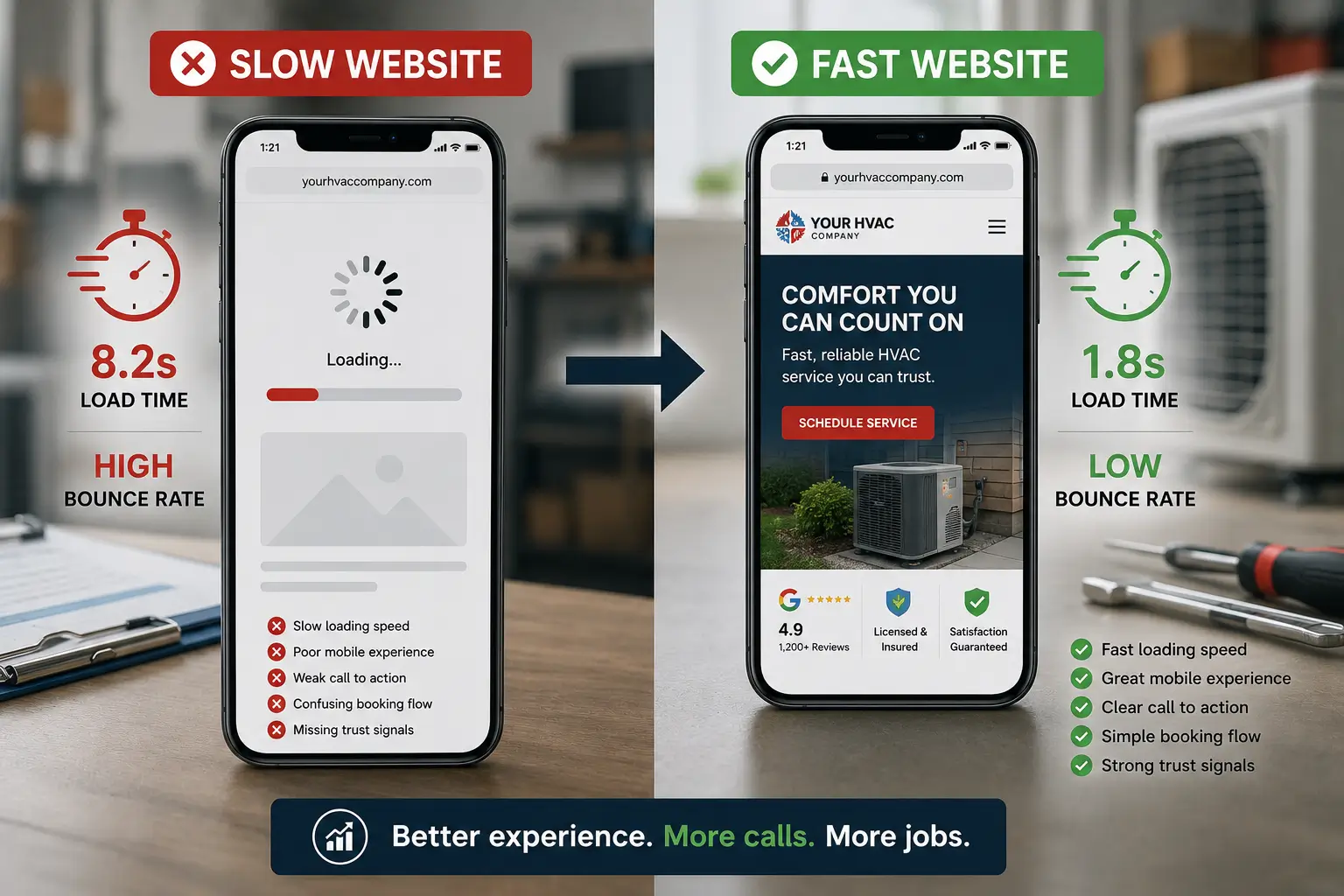
When your website takes more than 3 seconds to load, users don’t wait.
They leave.
According to Google, 53% of mobile users abandon a website if it takes longer than 3 seconds to load.
Common Speed Problems I See
- Heavy image files
- Bloated WordPress setups
- Poor hosting environments
- No caching or optimization
- Excessive scripts and plugins
Why It Matters
A slow website doesn’t just hurt SEO.
It hurts trust.
Users immediately associate slow websites with outdated businesses.
And if your competitor loads faster than you do, they usually get the call.
How to Fix It
- Compress and convert images to WebP
- Implement caching and CDN systems
- Remove unnecessary plugins and scripts
- Improve Core Web Vitals
- Optimize mobile performance first
If your website feels slow or unresponsive, this is exactly what we fix inside our Speed & Booking Fix service.
Weak or Invisible Calls to Action
One of the biggest problems I see on HVAC websites is weak CTA placement.
Many websites make it surprisingly difficult to contact the business.
Common CTA Mistakes
- “Contact Us” is hidden in the navigation
- No visible phone number above the fold
- No sticky mobile CTA
- Multiple competing actions
- Generic button text
Why It Hurts Conversions
Website visitors don’t want to think.
They want clear direction.
If your next step isn’t obvious within a few seconds, users leave.
How to Fix It
- Add a primary CTA above the fold
- Use action-focused buttons:
- Call Now
- Request Service
- Book an Appointment
- Add sticky mobile call buttons
- Reduce distractions
Mobile Experience Is Broken (And That’s Where Most Leads Come From)
More than 70% of HVAC website traffic comes from mobile devices.
Yet many HVAC websites are still designed primarily for desktop.
What I Commonly See
- Tiny text
- Buttons too close together
- Slow mobile loading
- Difficult forms
- Cluttered layouts
Why This Matters
Even highly interested users abandon websites that feel frustrating on mobile.
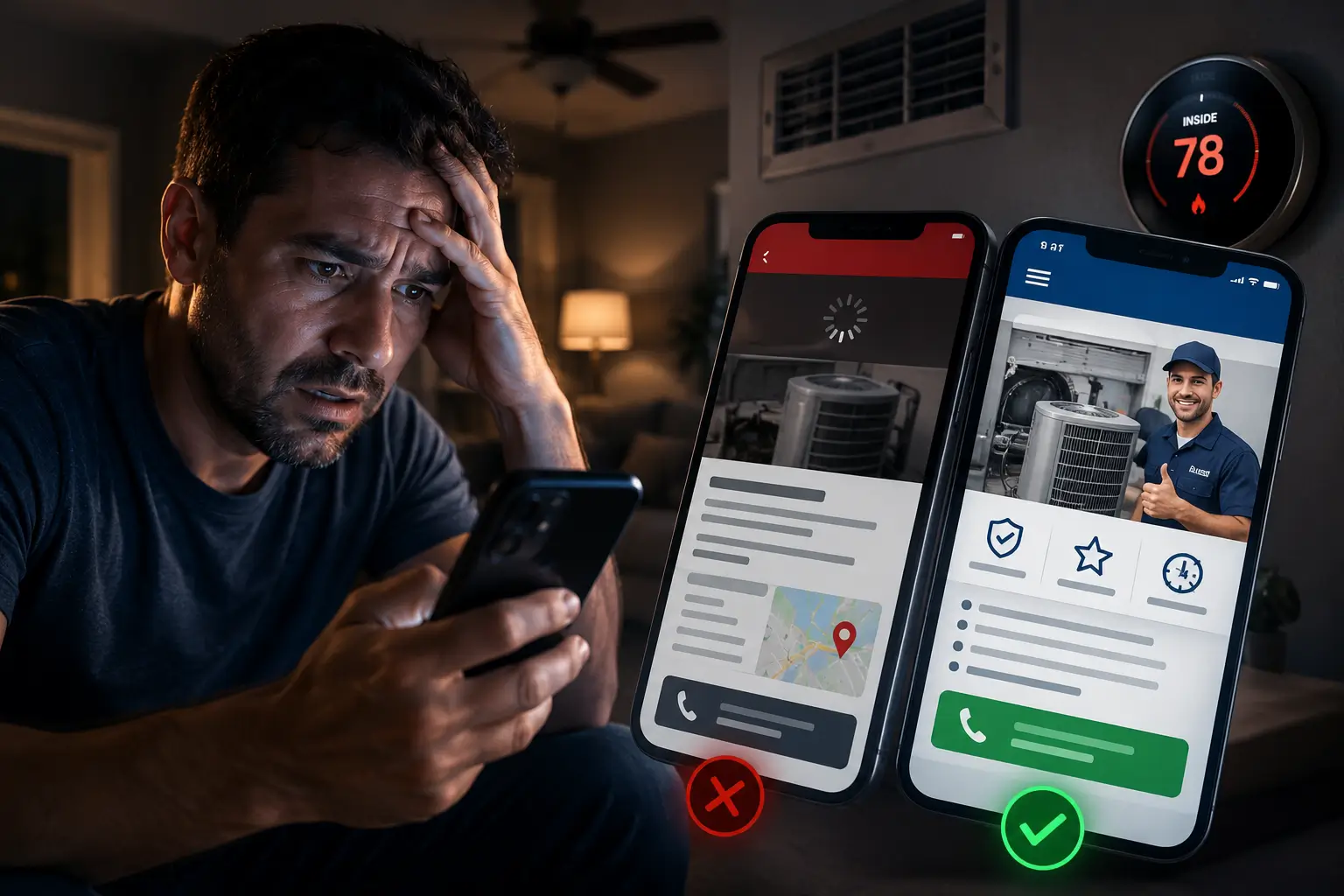
And since HVAC services are often urgent, users usually choose the business that’s easiest to contact.
How to Fix It
- Design mobile-first
- Increase button size and spacing
- Simplify forms to 3–4 fields maximum
- Improve mobile speed performance
- Test on real devices regularly
Confusing Booking and Contact Flow
Many HVAC websites accidentally create friction right before the conversion happens.
This is one of the most expensive mistakes.
Common Problems
- Long contact forms
- Too many booking steps
- No click-to-call functionality
- No instant confirmation
- Lack of contact flexibility
Why It Hurts
The more effort users need to make, the lower your conversion rate becomes.
People want convenience.
Especially when they’re dealing with HVAC emergencies.
How to Fix It
- Reduce the number of form fields
- Add click-to-call buttons
- Offer multiple contact methods
- Confirm submissions immediately
- Remove unnecessary booking steps
Want to see how this applies to your website?
Learn more about the process here
No Trust Signals = Lost Calls
People don’t hire HVAC companies they don’t trust.
Your website should build confidence immediately.
Unfortunately, many HVAC websites fail at this.
Common Missing Trust Signals
- Customer reviews
- Certifications and licenses
- Before-and-after proof
- Guarantees
- Real team photos
- Years in business
Why This Matters
Trust directly impacts conversions.
Without proof, users hesitate.
And hesitation kills leads.
How to Fix It
- Add real testimonials
- Display certifications and badges
- Showcase completed projects
- Use real photography whenever possible
- Highlight guarantees and response times
Poor Website Structure Creates Friction
Many HVAC websites overwhelm users with too much information.
Instead of guiding users toward action, they create confusion.
What I See Most Often
- Walls of text
- Poor visual hierarchy
- Cluttered sections
- Important information buried
- Weak page flow
Why It Matters
Visitors scan websites.
If your structure is confusing, users won’t spend time figuring it out.
They leave.
How to Fix It
- Break content into clear sections
- Improve spacing and readability
- Use strong headlines
- Highlight important actions visually
- Simplify navigation
What Happens When You Fix These Issues?
This isn’t theory.
When these problems are fixed, HVAC websites often see dramatic improvements.
Example Results
One of my optimization projects achieved:
- 100/100 PageSpeed score
- Improved mobile UX
- Faster booking flow
- Better CTA placement
The result?
👉 3X more quote requests in 3 weeks.
Want to know what’s hurting your website specifically?
Check out the full Speed & Booking Fix process here


Why Most HVAC Websites Stay Broken
Most businesses focus heavily on:
- Running ads
- Getting more traffic
- Improving rankings
But they ignore what happens after the click.
And that’s usually where the money is lost.
You don’t always need more traffic.
Sometimes you simply need a website that converts better.
How to Know If Your HVAC Website Is Losing You Leads
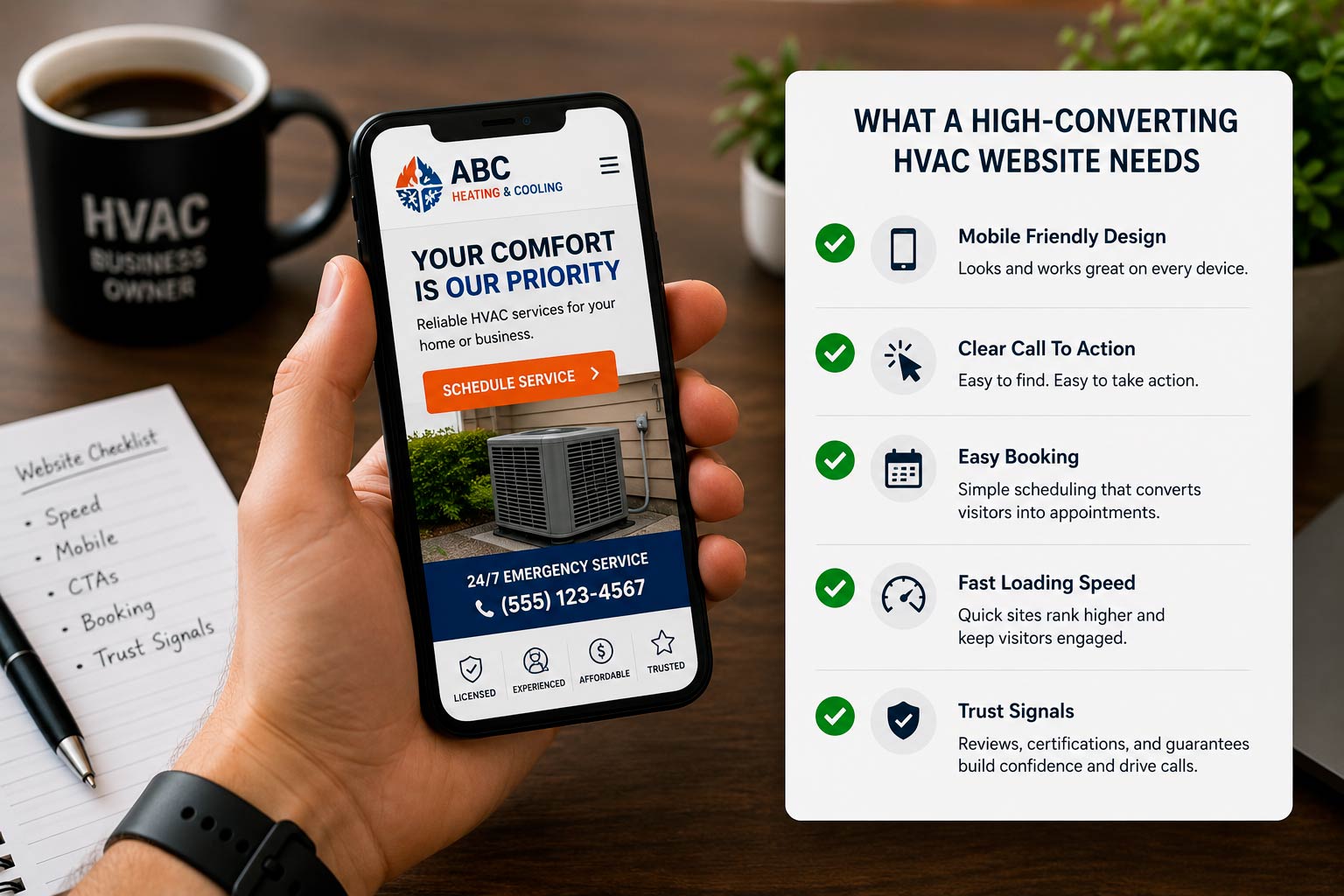
Ask yourself:
- Does your site load in under 3 seconds?
- Is your CTA immediately visible?
- Is your mobile experience smooth?
- Can users contact you within 1–2 clicks?
- Does your site build trust quickly?
If the answer is “no” to several of these questions, your website is likely losing potential customers every day.
Request a Free HVAC Website Audit
If you want to know exactly what’s hurting your conversions, I’ll show you.
I offer a free website audit (valued at $800) where I break down:
- Speed issues
- Conversion blockers
- Mobile UX problems
- CTA weaknesses
- Booking flow friction
No fluff.
Just practical insights focused on getting you more calls and bookings.
Request Your Free Audit Here
Frequently Asked Questions
What is HVAC conversion rate optimization?
HVAC conversion rate optimization is the process of improving your website so more visitors turn into calls, bookings, and leads.
How fast should an HVAC website load?
Ideally under 3 seconds. Faster websites typically convert significantly better and perform better on Google.
Do I need more traffic or a better website?
In many cases, improving your website converts more leads than simply increasing traffic.
Which HVAC businesses do you work with?
I work with HVAC businesses across the United States, including companies in:
Houston
Miami
Orlando
Tampa
Los Angeles
San Diego
Conclusion
Your website shouldn’t just exist.
It should help grow your business.
Right now, many HVAC websites are leaking leads every single day because of slow speed, poor mobile experience, weak CTAs, and conversion friction.
The difference between average HVAC websites and high-performing ones usually isn’t traffic.
It’s what happens after the click.
Fix that, and everything changes.
If your website isn’t consistently bringing you calls and bookings, start here: